Quick answer
A professional roof inspection covers the shingles or roof surface, flashing around chimneys, walls, and valleys, pipe boots and vents, gutters and drip edge, signs of storm damage, and the soundness of the decking. It often includes the attic too. You should get a written or photo report that explains what was found and what, if anything, needs to be done.
Key takeaways
- A real inspection means someone gets on the roof. A glance from the ground isn’t enough.
- Flashing and pipe boots cause more leaks than the shingles themselves.
- Ask for photos. They make the findings easy to understand and are useful for insurance.
- Most inspections take 30 to 60 minutes for an average home.
A roof inspection is the simplest way to find out what shape your roof is in before a small problem turns into a leak. Here’s what a thorough inspection covers and what you should expect to get at the end.
What does the inspector look at on the roof?
A good inspection is done on the roof, not just from the ground. The inspector walks each slope (when it’s safe) and checks:
Shingles or roof surface
- Missing, cracked, curled, or lifted shingles
- Granule loss and bald spots
- Hail bruises, which feel soft like a bruise on an apple
- Wind creases where shingles were lifted and folded back
- Moss, algae, and debris buildup
Flashing
Flashing is the metal that seals the joints where the roof meets something else, like a chimney, a wall, a skylight, or a valley between two slopes. More leaks start at flashing than anywhere else. The inspector looks for rust, gaps, lifted edges, and cracked or missing sealant.
Pipe boots and roof penetrations
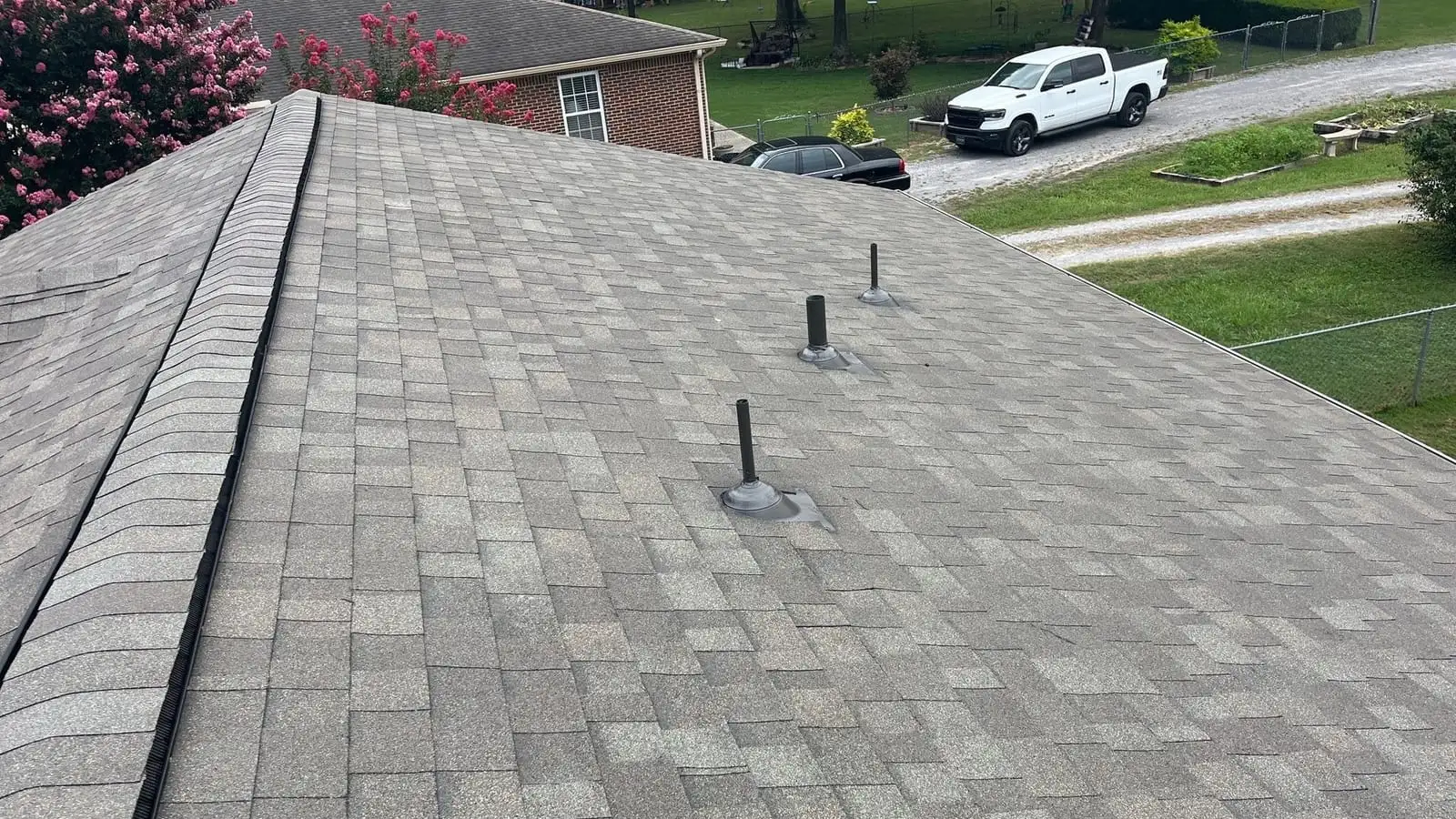
The rubber collars around plumbing vent pipes crack in the sun after several years and let water run straight down the pipe. They’re cheap to replace and a very common cause of leaks.
Vents and ventilation
Ridge vents, box vents, and turbines are checked for damage. The inspector also considers whether the attic has enough intake and exhaust airflow, which affects how long the shingles last.
Gutters, drip edge, and fascia
Gutters that are clogged, pulling away, or overflowing can rot the roof edge and fascia boards. Lots of shingle granules in the gutters is also a clue about the roof’s age.
The decking
Walking the roof shows whether the decking (the plywood or OSB under the shingles) feels solid or soft. Soft spots usually mean long-term moisture and rot.
Does a roof inspection include the attic?
It should when possible. The attic shows problems you can’t see from outside:
- Water stains or damp spots on the underside of the decking
- Daylight coming through
- Wet or compressed insulation
- Mold or mildew
- Blocked soffit vents or poor airflow
If you’ve noticed a ceiling stain, the attic is where an inspector will trace it back to the source.
What about storm damage?
After hail or high winds, an inspection focuses on documenting damage for a possible insurance claim. That includes hail hits on shingles, plus dents on soft metals like vents, gutters, and downspouts, and missing or creased shingles. Inspectors often mark and photograph test squares on each slope. Learn more in our guide on how to tell if your roof has hail damage.
What should you get after the inspection?
You should get a clear explanation, ideally with photos, covering:
- The overall condition of the roof and its estimated remaining life
- Any damage or problem areas, where they are, and how serious they are
- What needs attention now and what can wait
- Whether a repair, a replacement, or nothing at all is recommended
Be cautious of anyone who won’t show you photos of the damage they say they found.
How often should you get your roof inspected?
A good rule of thumb is every one to two years, and every year once the roof is over 15 years old. Get one after any significant hail or wind storm, and before buying or selling a home.
Free roof inspections in Morgan County
Boxwood provides free roof inspections for homeowners in Hartselle, Decatur, Priceville, Falkville, Somerville, Trinity, and the surrounding area. We get on the roof, take photos, and give you an honest condition report with no obligation. If you have storm damage, we can help with the insurance process and meet your adjuster in person.
Frequently asked questions
How long does a roof inspection take?
For a typical single-family home, 30 to 60 minutes. Steep, large, or complex roofs, or a full storm-damage documentation for an insurance claim, can take longer.
Do I need to be home for a roof inspection?
Not always for the exterior, but it helps. If the inspector needs to check the attic or look at a ceiling stain, someone needs to let them in. Being there also lets you ask questions and see the photos right away.
Is a roof inspection the same as a home inspection?
No. A general home inspector often looks at the roof from the ground, a ladder, or a drone and may flag concerns. A roofing contractor’s inspection goes deeper on the roof system itself, including flashing, ventilation, decking, and storm damage, and comes from someone who repairs roofs for a living.
About the author
Jon Berry owns Boxwood Roofing & Restoration, a licensed, family-owned roofing contractor in Hartselle, AL, serving Morgan County homeowners since 2017.